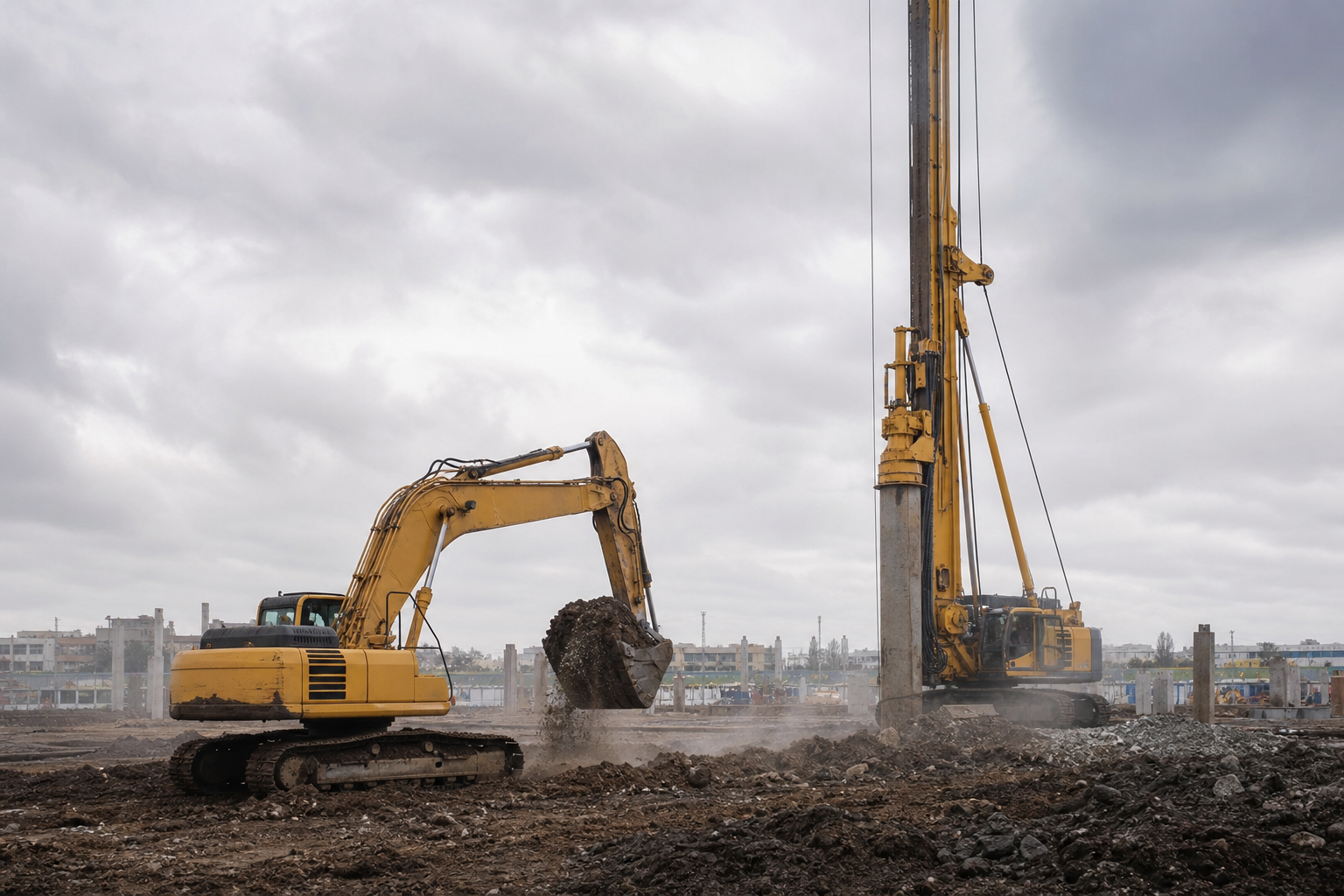
On heavy equipment, downtime rarely starts with a sudden catastrophic failure. More often it begins with delayed maintenance — clogged filters, neglected oil changes, loose connections or hydraulic lines left unchecked until a small leak becomes days of lost production.
What scheduled maintenance means on site
Periodic service is not an optional extra cost; it is a predictable operating plan. Machines that are monitored on a clear interval catch failure trends earlier, allow spare parts to be ordered before they are urgent, and improve operator safety.
- Lower risk of sudden breakdowns
- More stable fuel and oil consumption
- Longer life for critical components
- Fewer surprises in the site schedule
Priority checks on every service round
1. Engine and lubrication
Oil level, filter condition, coolant and belt checks look simple at first glance, yet neglecting them produces the most expensive damage. Hour-based maintenance intervals must be clear and enforced.
2. Hydraulic system
Leaks around hoses, seals, cylinders and pumps should be read together with heat and power loss. Early intervention often prevents a full rebuild.
3. Undercarriage and travel
Track tension, bearings and pin-bush clearances wear quickly in harsh ground conditions. Uneven wear hurts both fuel use and directional control.
The Bybars maintenance approach
At Bybars we assess machine type, duty cycle and site conditions together. The goal is not only an oil change — it is a technical plan that reduces downtime risk.